Stationary Set Illustrations Vector: Your Design Toolkit
Every designer, entrepreneur, and content creator knows the feeling. You have a brilliant concept for a brand, a presentation, or a marketing campaign, but the execution stalls when you start searching for the right visual elements. Finding high-quality, versatile, and cohesive design assets can be a time-consuming challenge. This is where a well-curated Stationary Set Illustrations Vector collection becomes an indispensable part of your creative toolkit. It’s not just about having pretty pictures; it’s about having a reliable, editable foundation that brings your vision to life with clarity and professionalism.
Understanding the Core of This Design Asset
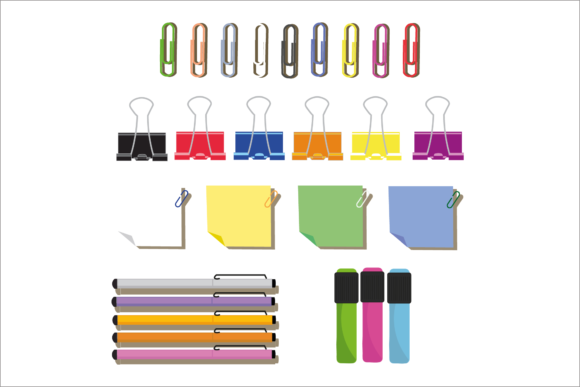
At its heart, this Stationary Set Illustrations Vector is a collection of graphic elements depicting common office and creative tools—think pens, notebooks, scissors, tape dispensers, rulers, and paperclips—rendered in a clean, modern vector style. The visual personality is approachable and slightly playful, yet maintains a sharp, professional edge. It avoids overly complex textures or gradients, focusing instead on solid colors, clear outlines, and balanced compositions. This style ensures the illustrations feel contemporary and can seamlessly integrate into a wide array of projects without overwhelming the main message. The overall appeal lies in its versatility; it feels at home in both corporate and creative environments.
The true power of this asset is its availability across critical file formats: AI, EPS, SVG, DXF, JPG, and PNG. Each format serves a distinct purpose. The vector files (AI, EPS, SVG) are your workhorses for any project requiring scalability—meaning you can enlarge them to billboard size or shrink them for a business card without losing a single pixel of quality. The DXF file is particularly valuable for crafters and hobbyists using cutting machines like Cricut or Silhouette. The raster files (JPG, PNG) are perfect for quick use in digital documents, social media posts, or presentations where editing paths isn't necessary. The consistent 1920 px x 1280 px canvas size in each type provides a generous starting point, ensuring high-resolution output for most digital and print applications.
Where These Illustrations Shine: Practical Applications
The applications for a Stationary Set Illustrations Vector are vast, touching nearly every sector of the creative and commercial world. For brand identity and logo design, these elements can form the basis of an icon system or add context to a wordmark. Imagine a stationery brand using a stylized pencil icon as part of its logo lockup, or a freelance writer using a notebook illustration in their header. In editorial design and publishing, they break up text-heavy pages, create engaging chapter openers, or serve as spot illustrations in magazines and blogs.
When it comes to packaging design, these vectors can add a tactile, artisanal feel to product labels, especially for items like planners, art supplies, or handmade goods. For digital spaces, they are gold. Use them in web design for hero images, feature sections, or 404 pages. In social media graphics, they create eye-catching posts for platforms like Instagram, Pinterest, and LinkedIn—perfect for announcing a new blog post, promoting a workshop, or sharing a motivational quote with a visual anchor. Marketers can integrate them into email newsletters, infographics, and digital ads to increase visual interest and click-through rates.
Beyond commercial use, this set empowers personal projects. Crafters can use the SVG and DXF files to create custom stickers, vinyl decals for laptops or planners, and heat transfers for apparel. Bloggers and content creators can develop unique featured images, printable checklists, or digital planner inserts. The guarantee of editability is crucial here; you can adjust colors to match your specific palette, isolate single elements, or combine them into entirely new scenes.
Making It Work: Selection, Pairing, and Professional Use
Integrating any design asset effectively requires a thoughtful approach. Start by evaluating the project fit. The modern, clean style of this Stationary Set Illustrations Vector works best for projects aiming for a professional yet friendly aesthetic. It might not be the best match for ultra-luxury brands seeking ornate, classical motifs or for projects requiring photorealism. Review the included elements within the set. Does it contain the specific tools that resonate with your industry or message? A set heavy on artistic tools (brushes, palettes) suits a creative agency, while one with more traditional office items (staplers, folders) might benefit a corporate training module.
Font pairing is a critical consideration if you're combining these illustrations with typography. Because the illustrations are graphic and detailed, they pair best with clean, simple typefaces. A strong sans serif font for body text will maintain readability and let the illustrations pop. For headings, you could use a complementary serif font for a touch of tradition or a bold sans serif for impact. Avoid overly decorative script fonts or handwritten fonts in close proximity to the illustrations, as the competing details can create visual clutter. The goal is balance: let the illustrations add personality while the typography ensures clarity and hierarchy.
Always test your assets in context. Place the illustrations in your layout mockup. Check their readability—not of text, but of the illustration itself. Does the detail get lost when scaled down for a favicon? Does the color scheme hold up against your background? Use the vector formats to tweak and test. Finally, while this set is described as a commercial font and design asset, it's always prudent to review the specific license terms provided upon purchase. Understand the scope for commercial projects, client work, and merchandise to ensure full compliance and peace of mind. A well-chosen asset like this isn't just an ornament; it's a strategic component of effective visual communication, enhancing visual hierarchy, reinforcing brand perception, and ultimately engaging your audience more deeply.